Rand hits R17 as metro coalition talks drag on. What it means for you
The rand briefly hit R17 to the dollar on 17 November, its weakest since April. A strong dollar is the main cause, but Joburg, Tshwane and Ekurhuleni coalition nerves add pressure. Petrol should still drop in December.
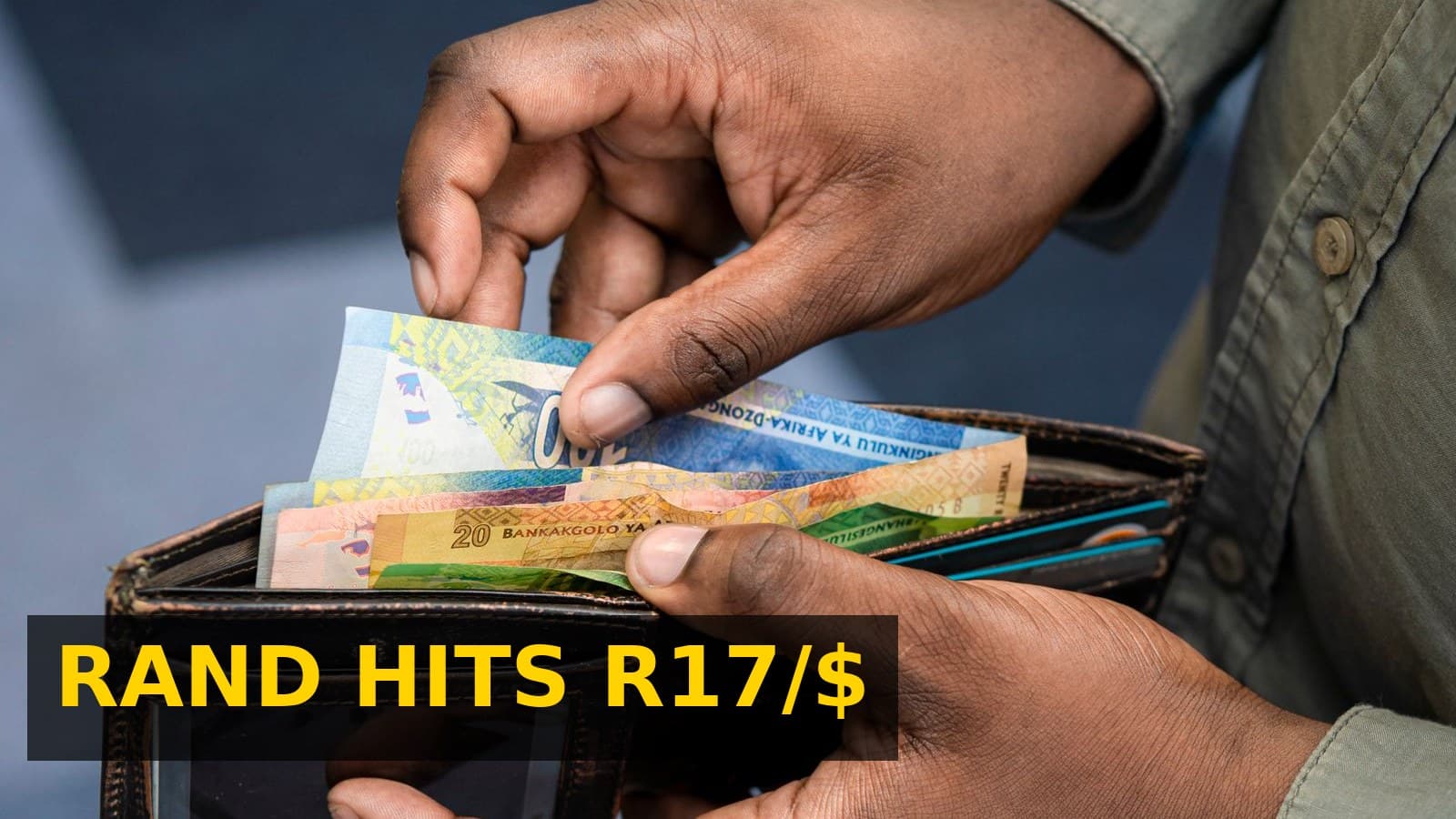
The rand briefly touched R17 to the US dollar in early trade on Tuesday, 17 November, its weakest level since April, before steadying at about R16.97 (Reuters via CNBC Africa). Economists say a strong dollar is the main reason, but nerves over who will govern Johannesburg, Tshwane and Ekurhuleni are adding to the pressure (Moneyweb).
The rand's worst level this year was R17.19, in March (Daily Investor).
Why is the rand falling this week?
Mostly because of the US. The dollar has strengthened on expectations that the US Federal Reserve will raise interest rates, which pulls investors towards US assets and away from currencies like the rand, Stanlib chief economist Kevin Lings told Moneyweb (Moneyweb). Lower precious metal prices have also hurt, Investec chief economist Annabel Bishop says (Daily Investor).
Local politics comes second. Lings says there is "nervousness that this is going to get very messy", with some people suggesting the Government of National Unity could break apart, which foreign investors would see as a problem (Moneyweb).
Wichard Cilliers, head of market risk at TreasuryONE, lists "dollar strength, a hawkish Fed, local politics and weaker emerging-market sentiment" as the drivers (Reuters via CNBC Africa).
What do the metro coalition talks have to do with it?
Markets are reacting to signs that the DA could be left out of the big Gauteng metros. Bishop points to indications that the ANC and ActionSA have lost some appetite for local coalitions with the DA, and says "investor confidence has fallen as little service delivery change is perceived on ANC coalitions excluding the DA" (Daily Investor). BusinessTech reports the rand is pushing R17 over worries the ANC will drop the DA (BusinessTech).
Where the talks stand on Tuesday:
- ActionSA leader Herman Mashaba has confirmed progress towards a possible deal with the ANC in Johannesburg, Tshwane and Ekurhuleni, but says a DA deal is still possible if Helen Zille and Cilliers Brink are not the DA's mayoral candidates (IOL).
- ActionSA chairperson Michael Beaumont called progress "still lukewarm" and hopes for agreements by the end of this week or early next week (EWN).
- The ANC said it would update the country on its coalition talks on Tuesday, 17 November (ANC).
No coalition agreement had been announced for any of the three Gauteng metros by midday on Tuesday. Reported has the seat maths for the Joburg and Tshwane mayor votes.
Will a weaker rand push up my petrol price?
Not in December, on current numbers. Lower oil prices are outweighing the weaker rand. Brent crude fell from about $118 a barrel at the end of October to about $92 on 16 November, and mid-month Central Energy Fund data points to big petrol cuts (TimesLIVE).
| Fuel (inland) | Now | Possible December price | Change |
|---|---|---|---|
| 93 petrol | R29.87/l | about R27.22/l | down R2.65 |
| 95 petrol | R30.24/l | about R27.34/l | down R2.90 |
| 500ppm diesel (wholesale) | R30.85/l | about R31.13/l | up 28c |
| 50ppm diesel (wholesale) | R31.60/l | about R31.48/l | down 12c |
Source: TimesLIVE, based on CEF data from 30 October to 16 November. These are projections, not final prices.
A rand that stays near R17 would shrink those cuts. The final December adjustment takes effect on 2 December (TimesLIVE). TimesLIVE also notes that the fuel tax relief introduced in November is being reversed in January, adding 50c/l to petrol and R1.50/l to diesel (TimesLIVE).
What about interest rates and my bond?
The Reserve Bank's Monetary Policy Committee announces its rate decision on Thursday, 19 November (Daily Investor). Analysts polled by Reuters widely expect it to keep rates on hold (Reuters via CNBC Africa). The repo rate is 7.25% and prime is 10.75% (Moneyweb).
A weak rand makes that call harder. "Rand weakness in itself proves inflationary," Bishop says, because imports cost more (Daily Investor). October inflation figures come out on Wednesday, 18 November, and economists polled by Reuters expect a rise to 5.2% from 4.5% in September (Reuters via CNBC Africa). Reported explains what a hike or hold would mean for bond repayments.
What happens this week?
| Day | What happens |
|---|---|
| Tuesday 17 November | ANC update on coalition talks |
| Wednesday 18 November | October inflation figures |
| Thursday 19 November | Reserve Bank rate decision; Joburg and Tshwane councils expected to sit |
| Thursday 26 November | Deadline for new councils to be constituted |
Sources: ANC; Reuters via CNBC Africa; Daily Investor; Reported; IOL.
Will the rand recover?
Lings expects this to be a short phase of a week or two rather than a longer trend, as long as "the politics is still on track". He thinks the rand could strengthen again towards the end of the year, but warns it is "short-term dependent on what coalitions for the big metros have got in place and how stable they are" (Moneyweb).
FAQ
Why did the rand hit R17 to the dollar?
Mainly because of a stronger US dollar on expectations of US interest rate hikes, plus lower precious metal prices. Economists say nerves over metro coalition talks after the 2026 local elections are a second factor.
What was the rand's weakest level in 2026?
R17.19 to the dollar, in March 2026, according to Daily Investor. On 17 November it briefly touched R17, its weakest since April.
Will petrol go up in December 2026 because of the weak rand?
Mid-month CEF data shows petrol could still fall by about R2.65 (93) and R2.90 (95) a litre inland, because oil prices dropped. A rand near R17 would shrink those cuts. Final prices take effect on 2 December.
When is the Reserve Bank interest rate decision?
Thursday, 19 November 2026. Analysts widely expect rates to stay on hold, with the repo rate at 7.25% and prime at 10.75%.