Ebola is now in 5 countries. What it means for South Africa
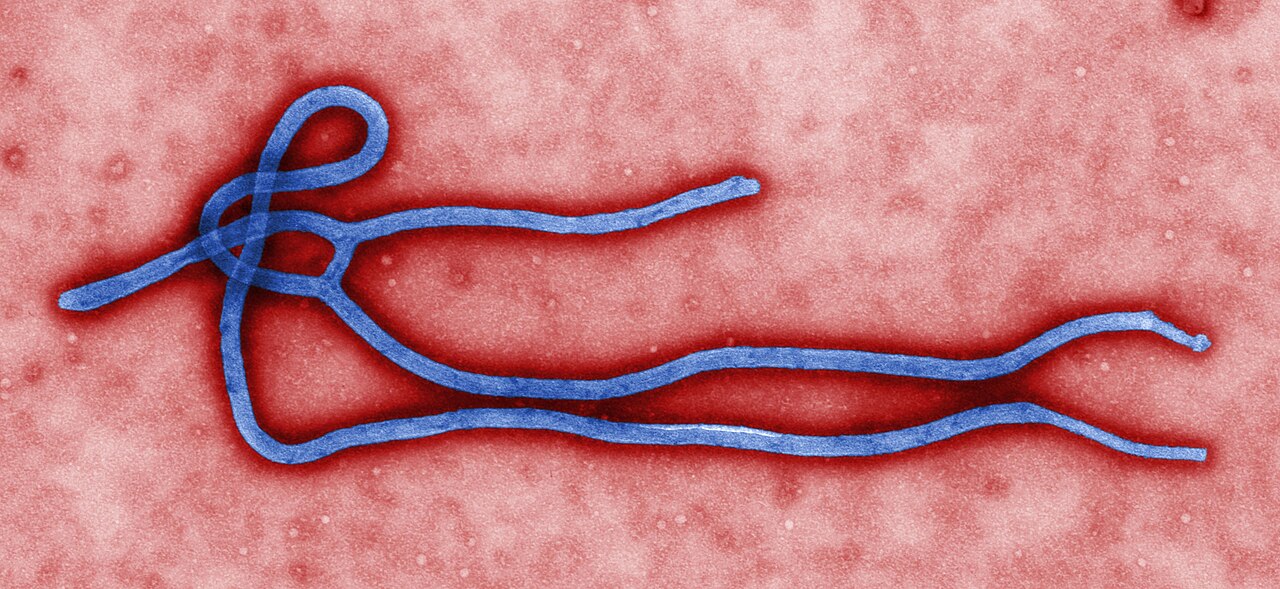
CDC/Cynthia Goldsmith, public domain, via Wikimedia Commons
South Africa has no confirmed Ebola cases, and the risk to the public remains low, the National Institute for Communicable Diseases (NICD) says. That is despite the outbreak now reaching five countries, after Nigeria confirmed an imported case this week (NICD).
The outbreak is caused by the Bundibugyo strain of Ebola. There is no vaccine and no specific treatment for it yet (EWN).
How big is the Ebola outbreak now?
As of 18 October, the Democratic Republic of the Congo (DRC) had 9,552 laboratory-confirmed cases, including 4,602 deaths, across eight provinces. Ituri province is worst hit, with 6,960 confirmed cases (NICD).
The other countries affected:
- Kenya: first case reported on 6 October, a traveller who came from the DRC through Kampala to Nairobi and died on 5 October. Nine cases by 20 October, all linked to that first patient (NICD).
- Nigeria: an imported case in Abuja, a traveller from Uganda who tested positive on 20 October. 44 contacts are being traced and monitored (NICD).
- Uganda: 20 confirmed cases and two deaths. The outbreak there was declared over on 27 August (NICD).
- France: one imported case from the DRC in June. The patient recovered (NICD).
The World Health Organization has declared the outbreak a Public Health Emergency of International Concern, and Africa CDC has declared a continental emergency (NICD). Africa CDC head Jean Kaseya called it the most geographically widespread Ebola outbreak in history (EWN).
Is South Africa at risk?
The NICD says Ebola does not occur naturally in South Africa and no case has been confirmed here. Imported cases are still possible if someone is exposed in an affected country and then travels (NICD).
The WHO rates the risk as very high in the DRC, high for countries bordering the DRC, and low for the rest of Africa and the world (WHO). It does not recommend travel or trade restrictions (NICD).
South Africa has surveillance, laboratory testing and infection control plans in place, and health workers have been told to watch for suspected cases (NICD).
How does Ebola spread?
Through close, direct contact with an infected person's body fluids. Blood, faeces and vomit are the most infectious. Health workers, family members caring for a sick person and mourners who touch the body at funerals are at highest risk (NICD).
It is not something you pick up from passing someone in a shopping centre or on a flight without contact with body fluids.
What are the symptoms?
The NICD's guidance for doctors lists sudden fever (38°C or higher), nausea, vomiting, diarrhoea, severe headache, muscle pain, stomach pain or unexplained bleeding. A suspected case is someone with these symptoms who was in an outbreak area of the DRC or Uganda in the previous 21 days and had contact with a case, or who has an unexplained illness that tests negative for malaria (NICD).
What should you do if you've travelled to an affected country?
If you get sick within 21 days of returning, see a doctor and tell them where you travelled. Doctors are told to rule out malaria too, as it causes similar symptoms (NICD).
Doctors and hospitals report suspected cases to the NICD's 24-hour hotline on 0800 212 552 (NICD).
FAQ
Are there Ebola cases in South Africa?
No. The NICD says no case has been confirmed in South Africa and the risk to the public is low.
Which countries have Ebola cases in the 2026 outbreak?
The DRC, Kenya and Nigeria have current cases. Uganda's outbreak was declared over on 27 August and France had one imported case in June.
Is there an Ebola vaccine for the Bundibugyo strain?
No. There is no vaccine and no specific treatment for the Bundibugyo strain yet, according to the WHO and Nigerian health officials quoted by EWN.
How does Ebola spread?
Through close, direct contact with an infected person's body fluids, especially blood, faeces and vomit. Carers, health workers and mourners at funerals are most at risk.
Are there travel bans because of Ebola?
No. The WHO does not recommend travel or trade restrictions for this outbreak.