No VAT relief on electricity. What the 15% costs you every month
Treasury has ruled out zero-rating electricity, so 15% VAT stays on prepaid tokens and bills. Here's how much VAT is in your monthly spend and what help exists instead.
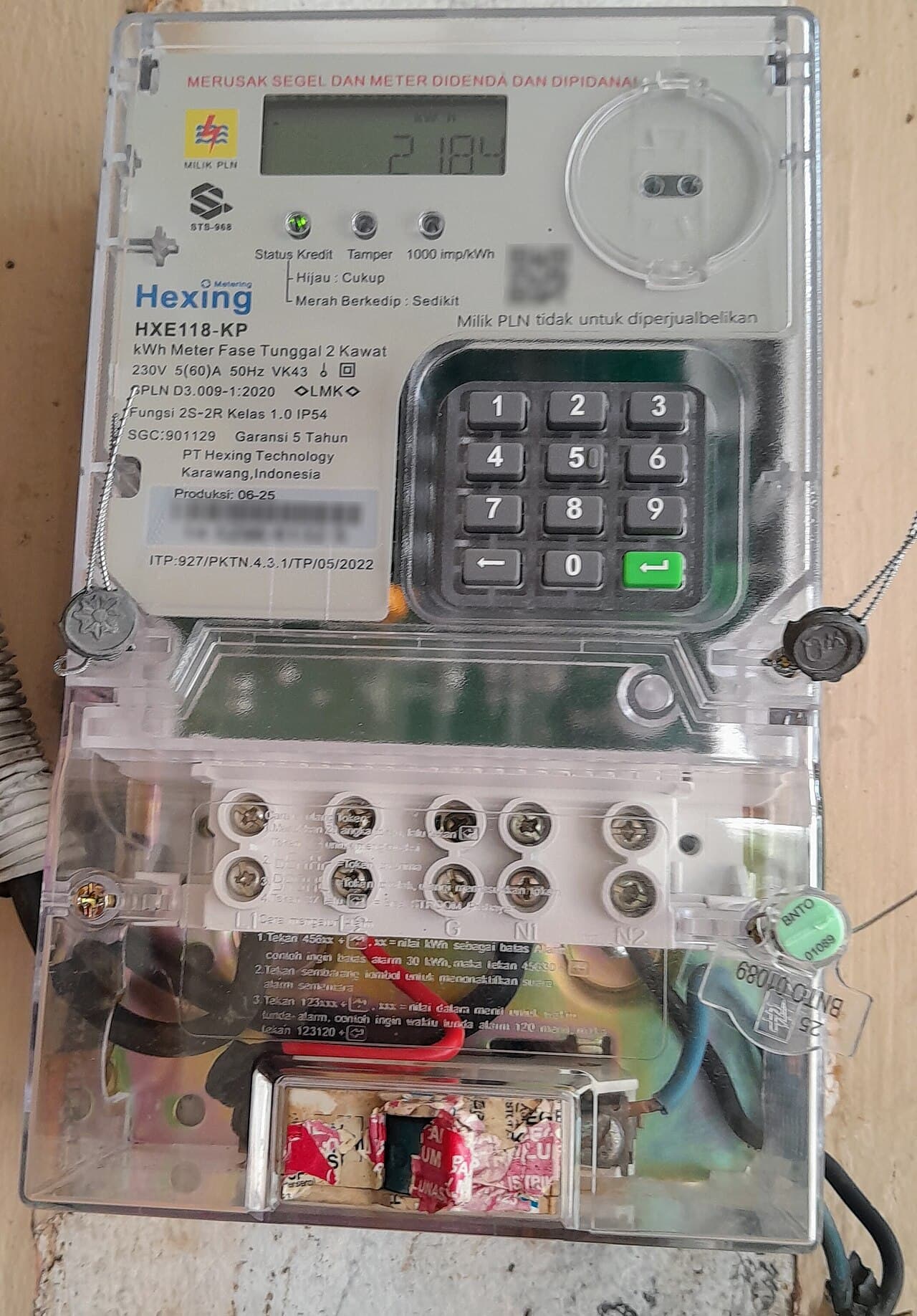
National Treasury has ruled out removing VAT from electricity, so the 15% tax stays on every prepaid token and municipal bill you pay. Treasury says it has no plans to zero-rate electricity, either fully or for a basic amount each household uses per month, IOL reported on 31 October 2026.
The decision lands as tariffs keep climbing. Debt counselling firm DebtBusters puts the increase at 101% since 2021 and as much as 165% over the past decade, according to IOL.
Why won't Treasury drop VAT on electricity?
Treasury told IOL that keeping a broad VAT base matters for the efficiency of the tax system, and that zero-rating electricity would cut government revenue. "VAT is a revenue raising instrument applied on goods and services, of which electricity is one," the department said (IOL).
It also admitted it has not assessed what VAT on electricity costs lower- and middle-income households, and has not modelled the cost of exempting the first 50kWh, 100kWh or 200kWh a month (IOL).
The electricity, gas and water sector brought in about R22.21 billion in net VAT in 2024/25, citing SARS tax statistics (IOL).
How much VAT is in your electricity spend?
VAT is charged at the standard rate of 15% (SARS). Prepaid tokens and municipal bills already include it, so the VAT part of what you pay is 15/115 of the total. Here is what that works out to:
| You spend per month | VAT included | VAT over 12 months |
|---|---|---|
| R500 | R65.22 | R782.61 |
| R1,000 | R130.43 | R1,565.22 |
| R2,000 | R260.87 | R3,130.43 |
| R3,000 | R391.30 | R4,695.65 |
Reported's calculation at the 15% rate from SARS.
You may see higher figures elsewhere, such as R150 VAT on R1,000 of electricity. That number adds 15% on top of R1,000 rather than taking it out of a R1,000 purchase (IOL).
For scale, energy site EnergyBee estimates a typical three-bedroom home uses 700kWh to 900kWh a month, costing roughly R2,900 to R3,750 in summer at about R4.17/kWh (IOL).
Who wants VAT removed?
The MK Party has asked Treasury to add electricity to the list of zero-rated items. MK MP Crown Prince Adil Nchabaleng told IOL the party raised it during last year's VAT increase debate, and argued that VAT is even charged on free basic electricity (IOL).
Outa (the Organisation Undoing Tax Abuse) has not taken a firm position. Executive director Stephanie Fick said the state "will lose a lot of income it can't afford" (IOL).
Has this been tried before?
Yes, and it was turned down each time. When VAT started in 1991, a VAT committee decided poorer households should be helped outside the tax system. Treasury research in 2007 and an independent panel in 2018 both found zero-rating would mostly benefit wealthier homes, because they use more electricity in rand terms (IOL).
What help is there instead?
Government's answer is Free Basic Electricity. Qualifying indigent households get 50kWh a month, and the 2026/27 Budget set aside R21.6 billion for basic energy (IOL).
Treasury says an intergovernmental working group is checking whether 50kWh is still enough. It warned that many qualifying households miss out because of weak registration and delivery, so a bigger allocation alone wouldn't fix that (IOL).
If your household income is low, ask your municipality whether you qualify and how to register as indigent. Reported's guide to free basic electricity and how to register covers the steps.
Separately, the Department of Electricity and Energy's revised Electricity Pricing Policy is out for public comment and backs lifeline tariffs for low-income homes (IOL). Reported explained what the pricing policy could mean for your bill.
FAQ
Will VAT be removed from electricity in South Africa?
No. National Treasury says it has no plans to zero-rate electricity, either fully or for a basic monthly amount, as reported by IOL on 31 October 2026.
How much VAT do I pay on R1,000 of prepaid electricity?
About R130.43. Prepaid tokens include VAT at 15%, so the VAT part is 15/115 of what you spend.
How much free basic electricity do poor households get?
Qualifying indigent households get 50kWh a month. Treasury says a working group is reviewing whether that is enough. Ask your municipality how to register.