Solar on Eskom's grid? You pay R536 a month before using a unit
Eskom direct customers with grid-tied solar must be on Homeflex, which carries fixed charges of at least R535.80 a month. Eskom wants about R670 from April 2027, and NERSA decides on 26 November.
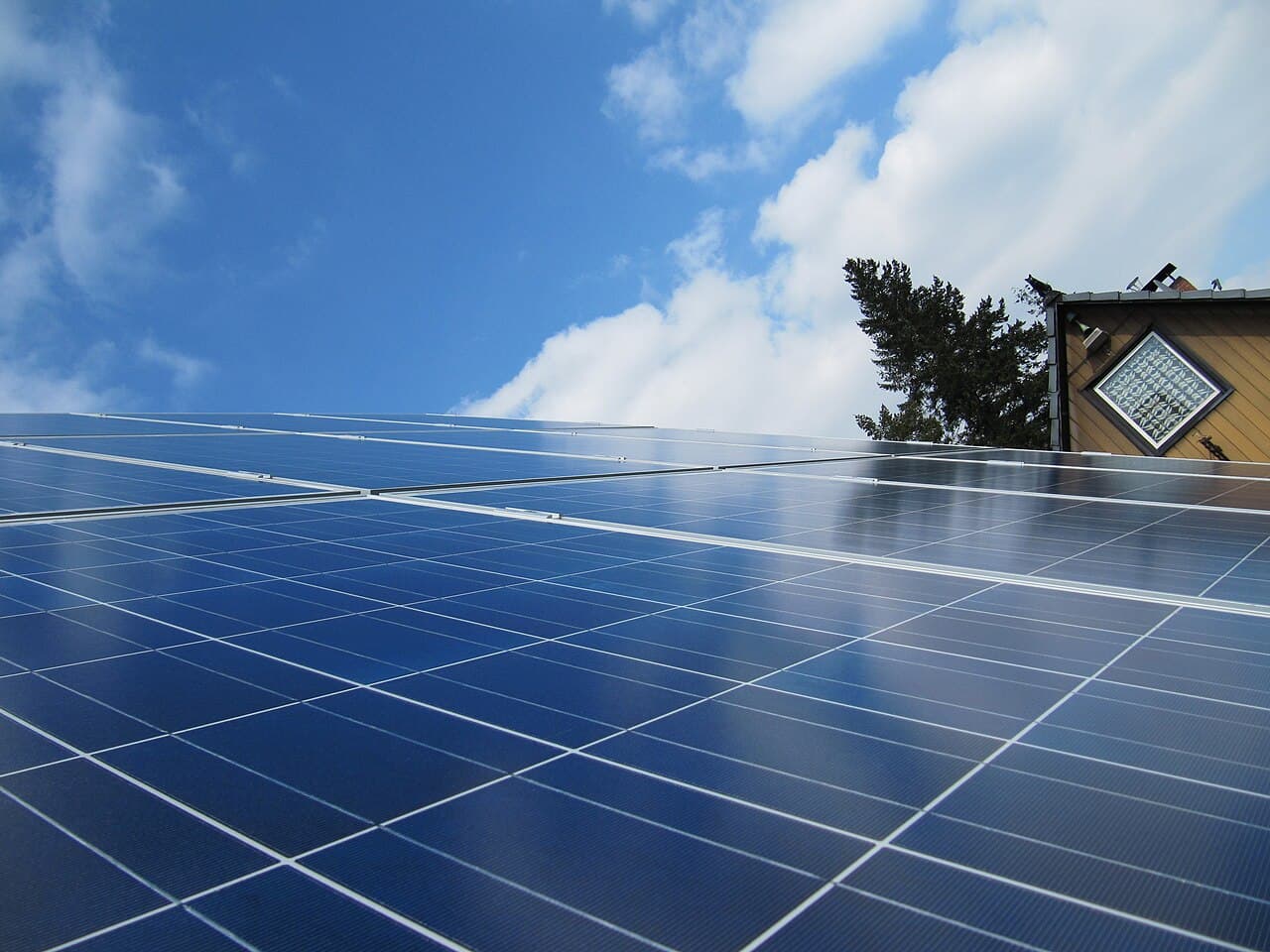
If your home buys power directly from Eskom and your solar system is connected to the grid, you already pay at least R535.80 a month in fixed charges before you use a single unit. That's on Homeflex 4, the single-phase tariff, and it could rise to about R670 a month from 1 April 2027 if the energy regulator signs off on Eskom's proposal on 26 November (Eskom tariff booklet 2026/27; MyBroadband; NERSA).
The charges are billed every day whether you use electricity or not, so a home that runs almost entirely on its own panels still pays them in full (Eskom tariff booklet).
Why are solar homes on Homeflex?
Eskom's tariff rules say a time-of-use tariff is compulsory for any home with grid-tied generation. For Eskom direct residential customers, that tariff is Homeflex (Eskom tariff booklet). BusinessTech reported on 10 November that solar users who register with Eskom as direct customers are moved onto Homeflex, which carries these fixed fees (BusinessTech).
Energy Minister Kgosientsho Ramokgopa has said behind-the-meter solar in South Africa has reached 9.4 GW (BusinessTech).
How much do you pay now?
Homeflex has three fixed daily charges: a network capacity charge and a generation capacity charge, both based on the size of your supply, and a service and administration charge that's the same for everyone. These are the 2026/27 rates, VAT included (Eskom tariff booklet):
| Homeflex tier | Supply size | Fixed charges per day | Per 30-day month |
|---|---|---|---|
| Homeflex 4 | Single-phase 16 kVA (80 A) | R17.86 | R535.80 |
| Homeflex 1 | Dual-phase 32 kVA or three-phase 25 kVA | R23.02 | R690.60 |
| Homeflex 2 | Dual-phase 64 kVA or three-phase 50 kVA | R42.68 | R1 280.40 |
| Homeflex 3 | Dual-phase 100 kVA or three-phase 100 kVA | R84.33 | R2 529.90 |
Source: Eskom Tariffs and Charges Booklet 2026/2027. Daily figures add the network capacity, generation capacity and service and administration charges. Monthly figures are Reported's calculation at 30 days.
On top of that you pay for every unit you buy, at rates that change by season and time of day (Eskom tariff booklet).
What could you pay from April 2027?
Eskom is phasing in its fixed charges over three years. This year the fixed part of the service and administration charge rose from 33.33% to 66.66% of the full amount Eskom wants, and next year it goes to 100% (Eskom; MyBroadband). Eskom has also applied to lower its energy rates so the overall average increase stays at the approved 8.83% (MyBroadband).
| Tier | Fixed per day now | Proposed from 1 April 2027 | Increase | About per month |
|---|---|---|---|---|
| Homepower/Homeflex 4 | R17.86 | R22.03 | 23.3% | R670 |
| Homepower/Homeflex 1 | R23.02 | R27.65 | 20.1% | R841 |
| Homepower/Homeflex 2 | R42.68 | R49.05 | 14.9% | R1 492 |
| Homepower/Homeflex 3 | R84.33 | R94.38 | 11.9% | R2 871 |
Source: MyBroadband, from NERSA's 2027/28 consultation paper. These are proposals, not approved tariffs.
The service and administration charge alone would go from R6.60 to R9.78 a day, according to solar company EnergyBee's reading of Eskom's application (EnergyBee). Because that increase is the same on every tier, smaller supplies take the biggest percentage hit (MyBroadband).
When will this be decided?
NERSA's timetable puts its decision on Eskom's tariff structure on 26 November 2026, with the decision sent to Eskom by 3 December (NERSA consultation paper). Public comment closed on 2 October (MyBroadband).
The 8.83% average increase itself is already settled. The consultation only decides how that money is split between fixed charges and per-unit rates (MyBroadband).
Do you get anything back for power you export?
Yes, but only up to what you use. Homeflex allows net billing, called Gen-offset: Eskom credits your bill at the end of each month for exported energy, up to the amount you consumed in each time-of-use period (Eskom tariff booklet).
Do you still have to register your solar system?
Yes. Eskom says registration of qualifying grid-connected systems is still required, but it has waived registration-related charges for customer-owned systems of up to 50 kVA connected directly to its network, until further notice (Eskom, 30 September 2026). TechCentral reported that the waiver has included a free bidirectional smart meter (TechCentral).
Outa has welcomed the waiver but still disputes whether Eskom can require registration of compliant systems that don't export power (Outa).
Does this apply if your municipality supplies your power?
No. These are Eskom direct tariffs. If you pay a municipality such as City Power, Tshwane or Cape Town for electricity, your fixed charges and solar rules are set by that municipality, and Eskom says municipal customers should check registration requirements with them (Eskom; MyBroadband).
How do you check which tariff you're on?
Your Eskom bill shows your tariff name and supply size. Eskom's full list of charges is in its 2026/27 tariff booklet, and you can query your account on Eskom's customer line, 08600 37566.
FAQ
How much is Eskom's fixed charge for solar homes?
Eskom direct customers with grid-tied solar must be on Homeflex. On Homeflex 4 (single-phase 80 A) the fixed charges are R17.86 a day including VAT, about R535.80 for a 30-day month, before any electricity is used.
Will Eskom's fixed charges go up in 2027?
Eskom has proposed raising the Homeflex 4 fixed charge to R22.03 a day, about R670 a month, from 1 April 2027. NERSA is due to decide on 26 November 2026, so the figure is not final.
Do I still need to register my solar system with Eskom?
Eskom says registration is still required for qualifying grid-connected systems, but it has waived registration-related charges until further notice for customer-owned systems up to 50 kVA connected directly to its network.
Do these Eskom charges apply to municipal customers?
No. They apply to Eskom direct customers. If a municipality supplies your electricity, it sets its own fixed charges and solar rules.
Sources
- Eskom: Tariffs and Charges Booklet 2026/2027
- Eskom: 2026/2027 tariff increase
- NERSA: ERTSA consultation paper for 2027/28
- MyBroadband: Eskom finalising 8.83% electricity price increase
- BusinessTech: One group of households getting nailed in South Africa
- EnergyBee: Eskom's R670 fixed charge explained
- Eskom: Waiver of solar registration charges extended
- Outa: Eskom drops solar registration charges indefinitely
- TechCentral: Eskom waives rooftop solar fees