Cape Town dams are at 70.4%: Level 1 rules from 1 December
Cape Town's dams were at 70.4% on 16 November, and the City will bring in Level 1 water restrictions from 1 December. Residents are asked to use 10% less water. Here is why, and what the rules will be.
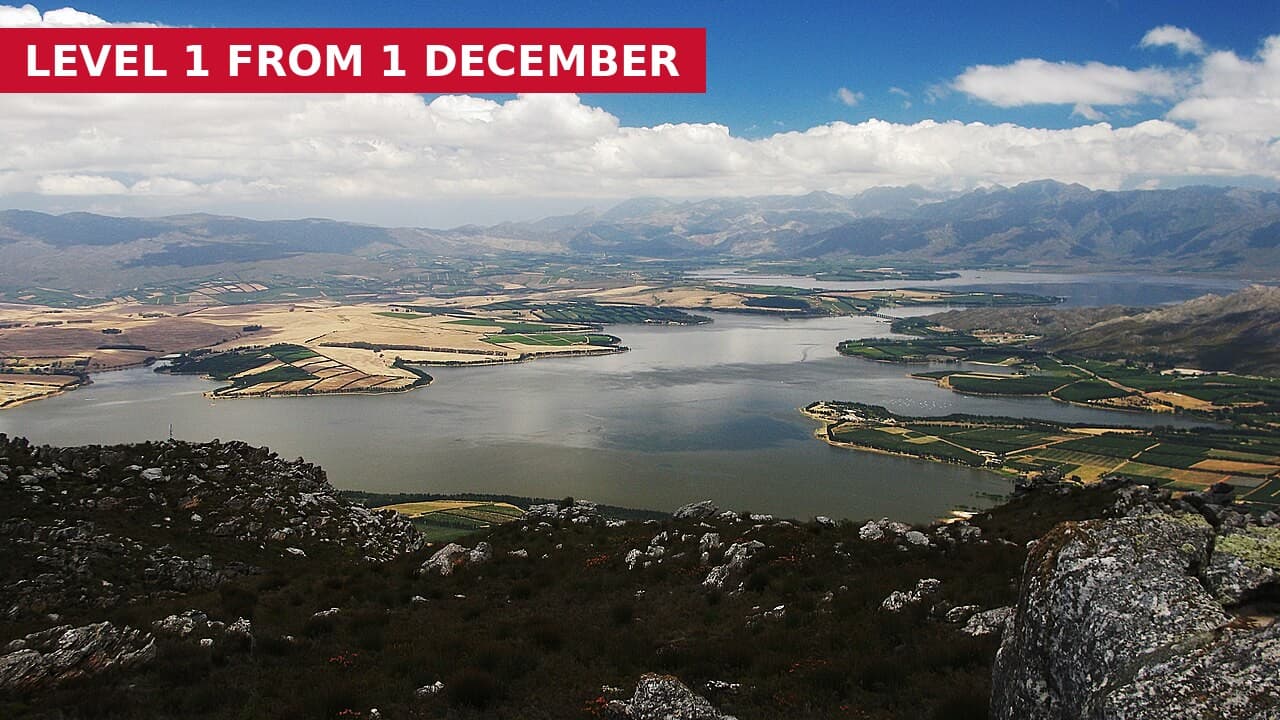
Cape Town's dams stood at 70.4% on Monday, 16 November, which is 13.4 percentage points lower than at the same time last year. The City of Cape Town will introduce Level 1 water restrictions from 1 December 2026 and has asked residents, visitors and businesses to use at least 10% less water this summer (City of Cape Town).
The restrictions are not in force yet. They start on 1 December. As a guide, the City says people should aim for no more than 85 litres per person a day, covering personal hygiene, cooking, cleaning and laundry.
The move follows the Department of Water and Sanitation's annual operating assessment of the Western Cape Water Supply System. Water and Sanitation Minister Pemmy Majodina announced a 7% cut in domestic and industrial allocations and a 15% cut in irrigation allocations (Minister Pemmy Majodina, 16 November 2026; SAnews).
Why are the restrictions coming?
Recent hot weather has pushed collective use to 951 million litres a day, more than 91 million litres above the City's target of 860 million litres a day (City of Cape Town).
The national department's figures, measured a little earlier, put combined storage in the Western Cape Water Supply System at 72.5% (646.5 million cubic metres) on 2 November, compared with 84.4% a year earlier. That is below the department's preferred operating threshold of 80%, and about 11.9 percentage points below the 10-year average of 84.49%. Majodina attributed the decline mainly to below-normal rainfall in the 2026 winter season. Rainfall in the 2024/25 and 2025/26 periods was 722.7mm and 752.8mm, against a long-term average of 964mm (Minister Pemmy Majodina).
The department says the system remains able to meet current requirements, but that a strong to extreme El Niño is forecast, and that the risk of shortages and tougher restrictions rises substantially from 2027 if users keep drawing their full allocations. The 7% and 15% cuts amount to about 56.8 million cubic metres a year, or 11% of total system allocations (Minister Pemmy Majodina; SAnews).
Leonardo Manus, the City's executive director for water and sanitation, said acting early reduces the chance of harsher rules later:
> "We cannot afford to wait until dam levels are critically low before acting. Level 1 restrictions give us the opportunity to manage demand early, protect our available water resources and reduce the risk of more stringent restrictions later." (City of Cape Town)
What are the Level 1 rules from 1 December?
These outdoor rules apply to municipal drinking water. The City says they sit on top of its permanent Water By-law, which applies at every restriction level (City of Cape Town; City restriction measures table, November 2026).
| Use | Level 1 rule from 1 December 2026 |
|---|---|
| Garden sprinklers, handheld hosepipes with trigger nozzles, and drip irrigation | Maximum one hour a day in total, on Tuesdays and Saturdays only, and only before 09:00 or after 18:00 |
| Buckets and watering cans | Allowed for garden watering, subject to the same times and the same one-hour daily limit |
| Sports fields and public parks (sprinklers) | Maximum one hour on Tuesdays and Fridays, before 09:00 or after 18:00 |
| Hosing down paving and other hard surfaces | Not allowed |
| Swimming pools | Filling and topping up allowed; pools must be covered when not in use. The City says rainwater should be used to top up, and backwash water recovered, where practically possible |
| Washing a car at home, and informal car washes | Bucket, or high-pressure, low-volume equipment |
| Commercial car washes | Allowed, if they follow water-conservation best practice and recycle at least 50% of the water used |
| Water features | Allowed at Level 1, according to the City's November 2026 restrictions table |
| Indoor use guide | No more than 85 litres per person per day |
Watering time is a maximum of one hour a day in total, no matter which method you use, and only before 09:00 or after 18:00 (City of Cape Town).
What already applies, even before 1 December?
The City's permanent Water By-law stays in force at all times, including after Level 1 starts. Among those standing rules (City restriction measures table, November 2026):
| Standing by-law rule | What it means |
|---|---|
| Garden watering times | Irrigation is only allowed before 09:00 or after 18:00, including with borehole or well-point water |
| Hosepipes | Hosepipes used for watering or washing vehicles, boats and caravans must have a controlling device, such as a sprayer or automatic self-closing fitting |
| Boreholes and well points | Must be registered with the City, used sparingly, and marked with the sign required by the by-law |
| Pool covers and automatic top-up | Pools must be covered when not in use. Automatic top-up from a potable float valve is not allowed |
| Paving and building sand | Municipal drinking water may not be used to hose hard surfaces or to dampen building sand |
Which areas does this affect?
Level 1 is the City of Cape Town's restriction level for its municipal supply. The Western Cape Water Supply System that sits behind it is made up of six linked dams: Theewaterskloof, Berg River, Wemmershoek, Voëlvlei, and Upper and Lower Steenbras. Besides Cape Town, the system also supplies the West Coast, Stellenbosch, Paarl, Franschhoek, Wellington and agricultural users (Minister Pemmy Majodina). Other municipalities may set their own local rules. Check your own council's notices if you live outside the City of Cape Town.
The minister's 7% and 15% cuts are to bulk allocations from the system, not a direct cut to the water coming out of a household tap. Municipalities then manage their reduced share, which is why Cape Town has moved to Level 1.
Will water cost more at Level 1?
The City's 2026/27 tariff book has a separate Level 1 water tariff. The City's 16 November statement confirming the restrictions does not itself spell out the date on which the Level 1 tariff starts to apply. Reported has set out the published rates in Cape Town Level 1 water tariffs: what you'll pay from 1 December.
How can households cut use by 10%?
The City says the 10% reduction can come from small daily habits: fix leaks promptly, take shorter showers, flush only when necessary, run washing machines and dishwashers only when full, and use a cup for shaving and brushing teeth (City of Cape Town).
Tips and the current regulations are on the City's Think Water page.
FAQ
When do Cape Town's Level 1 water restrictions start?
On 1 December 2026. The City of Cape Town confirmed this on 16 November 2026. They are not in force yet.
Why is Cape Town bringing in Level 1 restrictions?
The City says dams were at 70.4% on 16 November, 13.4 percentage points lower than a year earlier, and use has risen to 951 million litres a day, above the 860 million litre target. The national department also cut Western Cape allocations after its annual assessment.
When can I water my garden under Level 1?
For a maximum of one hour a day, on Tuesdays and Saturdays only, and only before 09:00 or after 18:00, using municipal drinking water. That one-hour limit applies no matter whether you use a sprinkler, a trigger-nozzle hosepipe, drip irrigation, a bucket or a watering can.
Can I fill my swimming pool under Level 1?
Yes. Filling and topping up are allowed, but pools must be covered when not in use. The City also says rainwater should be used for topping up, and backwash water recovered, where practically possible.
Do borehole users escape the rules?
No. Under the City's permanent by-law, borehole and well-point water for gardening may also only be used before 09:00 or after 18:00, and boreholes must be registered and signed.
Sources
- City of Cape Town: Capetonians called to use 10% less water under Level 1 restrictions this summer, 16 November 2026
- City of Cape Town: restriction measures for municipal drinking water use (all levels), November 2026
- Minister Pemmy Majodina: state of water resources in the Western Cape and 2026/27 operating analysis, 16 November 2026
- SAnews: Western Cape water users face allocation cuts amid El Niño risks, 16 November 2026
- IOL: What Cape Town's Level 1 water restrictions mean for residents from December, 17 November 2026
- SABC News: Cape Town to introduce Level 1 water restrictions from December, 17 November 2026