Voyager 1 went silent for 2 days. On 18 November it hits one light-day away
NASA lost Voyager 1's signal on 18 and 19 October 2026 before it returned on its own. On 18 November the probe becomes the first object one light-day from Earth.
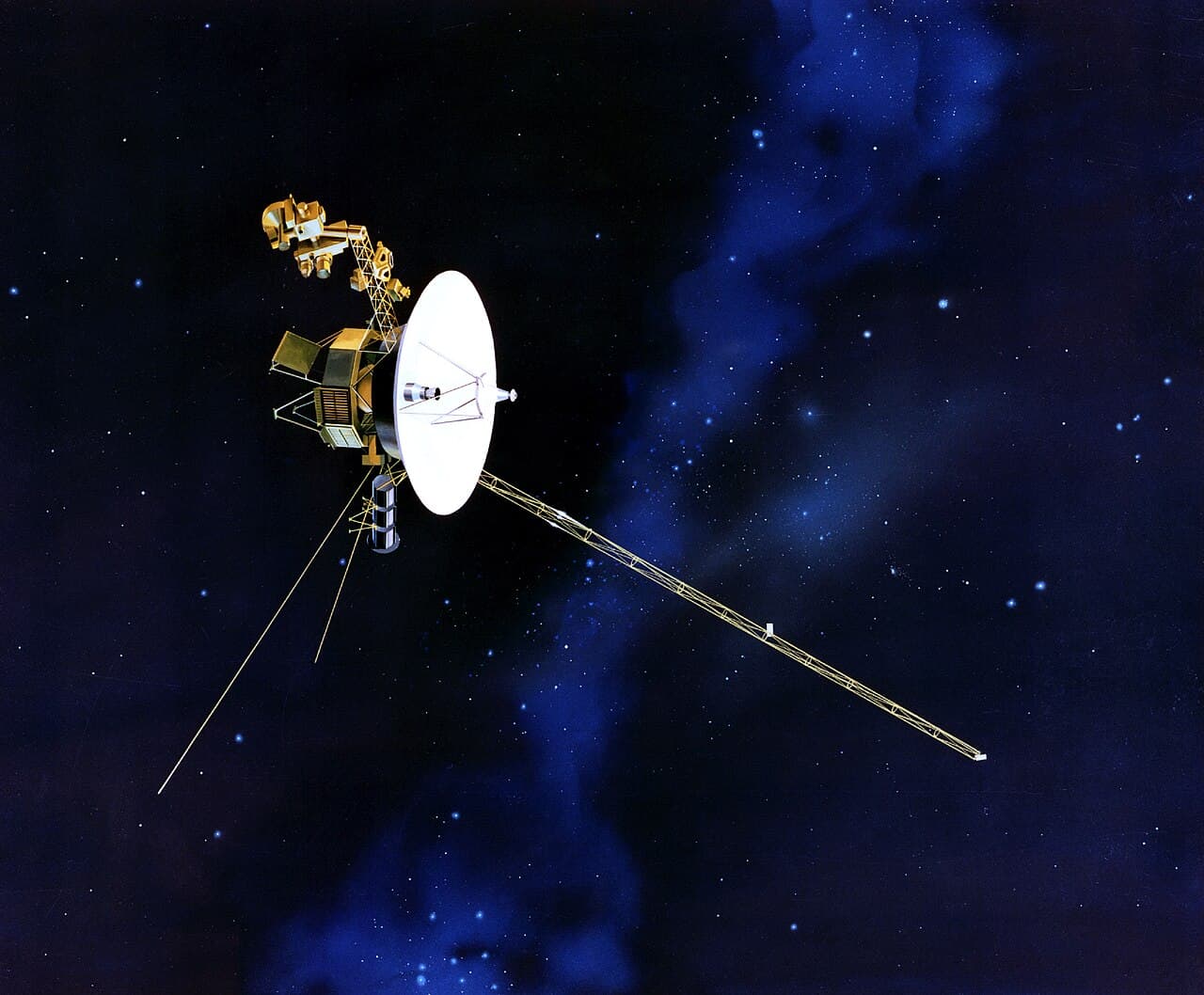
NASA lost contact with Voyager 1 for two days last month, and the 49-year-old probe is now weeks away from becoming the first human-made object a full light-day from Earth. The signal came back on its own on 20 October, before engineers had even sent a fix (NASA).
What happened to Voyager 1?
NASA's Deep Space Network, the giant antennas used to talk to distant spacecraft, could not pick up Voyager 1's radio signal on 18 and 19 October, during two scheduled contacts 24 hours apart. The signal reappeared on 20 October and contact has held since (NASA).
Engineers are still working out the cause. So far they have found that one group of thrusters went offline and the backups switched on. The spacecraft is programmed to do that by itself when its computers sense a fault, then put itself in a safe mode and pause normal work until the team can step in (NASA).
"This is the first time we've seen the spacecraft do something like this, but we are also at a point in the mission where we have to expect the unexpected," said Voyager mission manager Kareem Badaruddin of NASA's Jet Propulsion Laboratory (NASA).
How far away is Voyager 1 right now?
NASA puts it at about 24 billion km from Earth, moving at roughly 61,155 km/h (NASA).
| Milestone | Date | Distance from Earth |
|---|---|---|
| Launch | 1977 | 0 |
| Signal lost | 18 to 19 October 2026 | about 24 billion km |
| Signal back | 20 October 2026 | about 24 billion km |
| One light-day away | 18 November 2026 | 25.89 billion km |
Source: NASA
What does "one light-day" mean?
On 18 November Voyager 1 will be as far as light travels in a day. A command sent from Earth will take 24 hours to arrive, and the reply another 24 hours to come back (NASA).
"If you want to say 'hello' to Voyager, you send your message and then you go home and you wait two days before you finally get a response," said project manager Suzanne Dodd (NASA).
Nothing changes on the probe itself when it crosses the line. The milestone is about distance, not a new event out there (NASA).
How much longer will Voyager 1 last?
Not forever. Both Voyagers run on generators powered by decaying plutonium and lose about 4 watts a year (NASA).
In September engineers finished a power-saving swap nicknamed the "Big Bang", replacing three devices with lower-power versions. Without it, another science instrument would have had to be switched off as early as mid-2027 (NASA). The Register reports that both probes could still be working when they turn 50 next year (The Register).
Dodd has said the end will likely come as a day when the signal simply isn't there, followed by months of listening before the mission is declared over (The Register).
FAQ
Is Voyager 1 still working?
Yes. NASA lost its signal on 18 and 19 October 2026, but it returned on 20 October and contact has held since.
Why did Voyager 1 go silent?
NASA is still investigating. A group of thrusters went offline and backups switched on, which triggers the probe's automatic safe mode.
When will Voyager 1 be one light-day from Earth?
On 18 November 2026, at 25.89 billion km, according to NASA.
How long does a message to Voyager 1 take?
From 18 November, 24 hours each way, so about two days for a reply.