NASA's Swift satellite falls to Earth today. Why it can't land in SA
NASA's 1,450kg Swift telescope re-enters the atmosphere on 4 November 2026. Surviving pieces can only land between 20.6 degrees north and south, which keeps South Africa out of the zone.
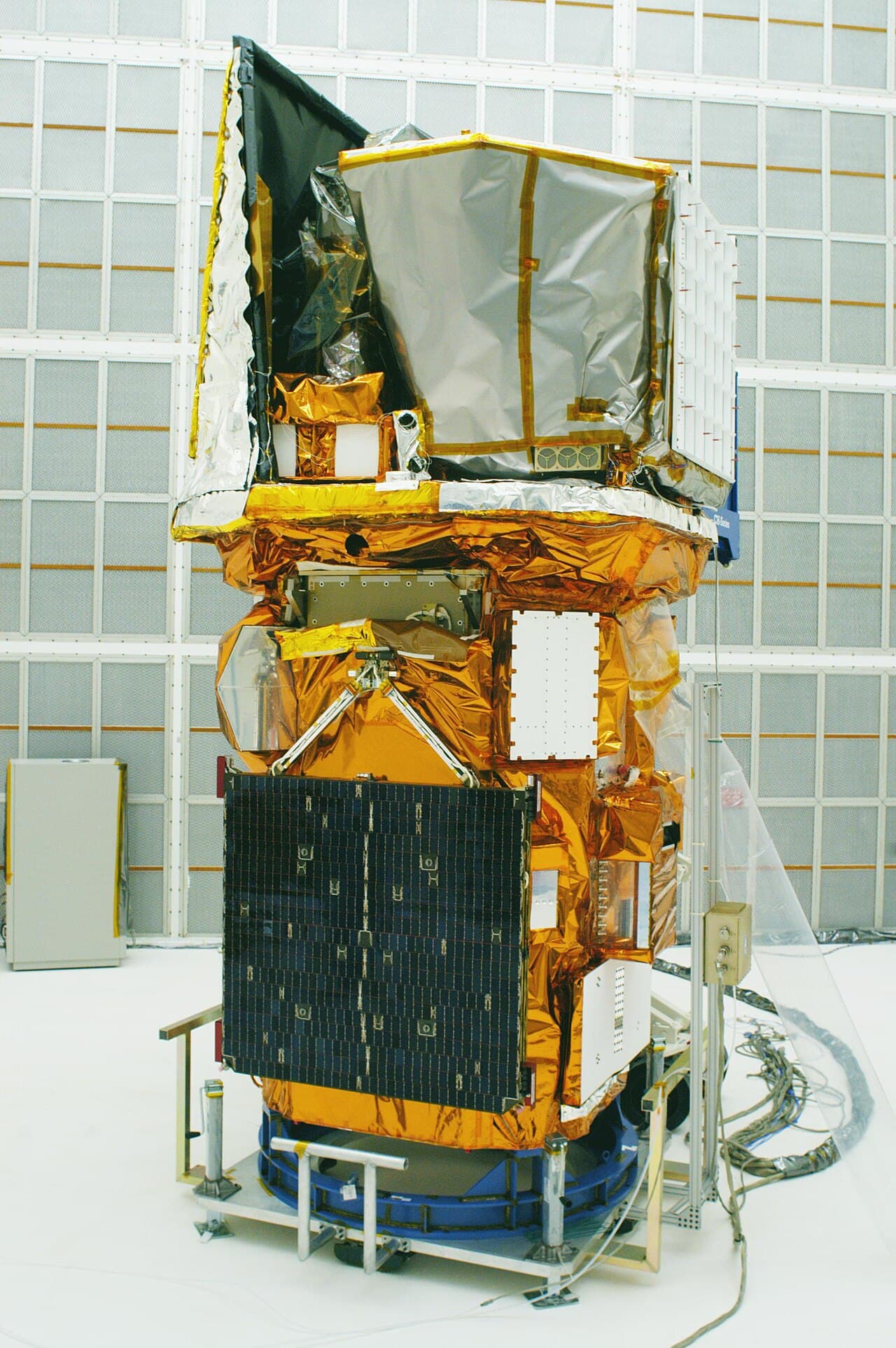
NASA's 1,450kg Swift space telescope is falling out of orbit today, 4 November, and South Africa is outside the zone where any surviving pieces can land. Most of the spacecraft is expected to burn up on the way down, NASA says.
When will Swift come down?
Nobody knows to the minute, because an uncontrolled re-entry gets more precise only in the final hours. The published predictions so far, converted to SA time:
| Forecaster | Predicted re-entry (SAST) | Margin |
|---|---|---|
| US Space Force, via NASA (2 November) | about 10:30 | 11 hours either way |
| Aerospace Corporation (3 November) | about 12:19 | 2 hours either way |
| Space-Track data, via WTH Was That | about 14:42 | 2 hours either way |
Sources: NASA, Live Science, WTH Was That.
Can pieces land in South Africa?
No. Swift's orbit only passes over a band between 20.6 degrees north and 20.6 degrees south of the equator, so any surviving fragments must land inside it, according to NASA. South Africa's northernmost point, near Pafuri in Limpopo, sits just south of 22 degrees south.
The band does cover parts of Africa further north, as well as India, the Arabian Peninsula, Latin America and a lot of ocean, Live Science reports. The latest track points to the Indian Ocean near the equator, WTH Was That shows, though that shifts with the exact time.
How dangerous is it?
Very low risk. NASA puts the chance of anyone on Earth being harmed at about 1 in 2,100 overall, per its update. Experts told Space.com that parts of the X-ray and optical telescopes are the pieces most likely to survive.
Why is it falling?
Swift launched in November 2004 and spent two decades studying gamma-ray bursts, the most powerful explosions in the universe. By October its orbit had dropped to about 275km and it could no longer fight the drag, so its team shut it down, Space.com reports. A commercial rescue mission to boost it higher failed.
What if you find a piece of space debris?
Don't touch it. Take photos and report it to your local police station, WTH Was That advises.
FAQ
When will NASA's Swift satellite re-enter?
On 4 November 2026. Forecasts range from about 10:30 to 14:42 South African time, with margins of two to 11 hours.
Can Swift debris land in South Africa?
No. Surviving pieces can only fall between 20.6 degrees north and 20.6 degrees south, and all of South Africa lies further south.
What should I do if I find space debris?
Don't touch it. Photograph it and report it to your local police station.