Court says one-name party lists are legal. What it means for your vote
The Electoral Court dismissed the DA's challenge to one-name PR lists from ActionSA, the EFF, MK and GOOD. The lists stand for 4 November and parties can add names after the vote.
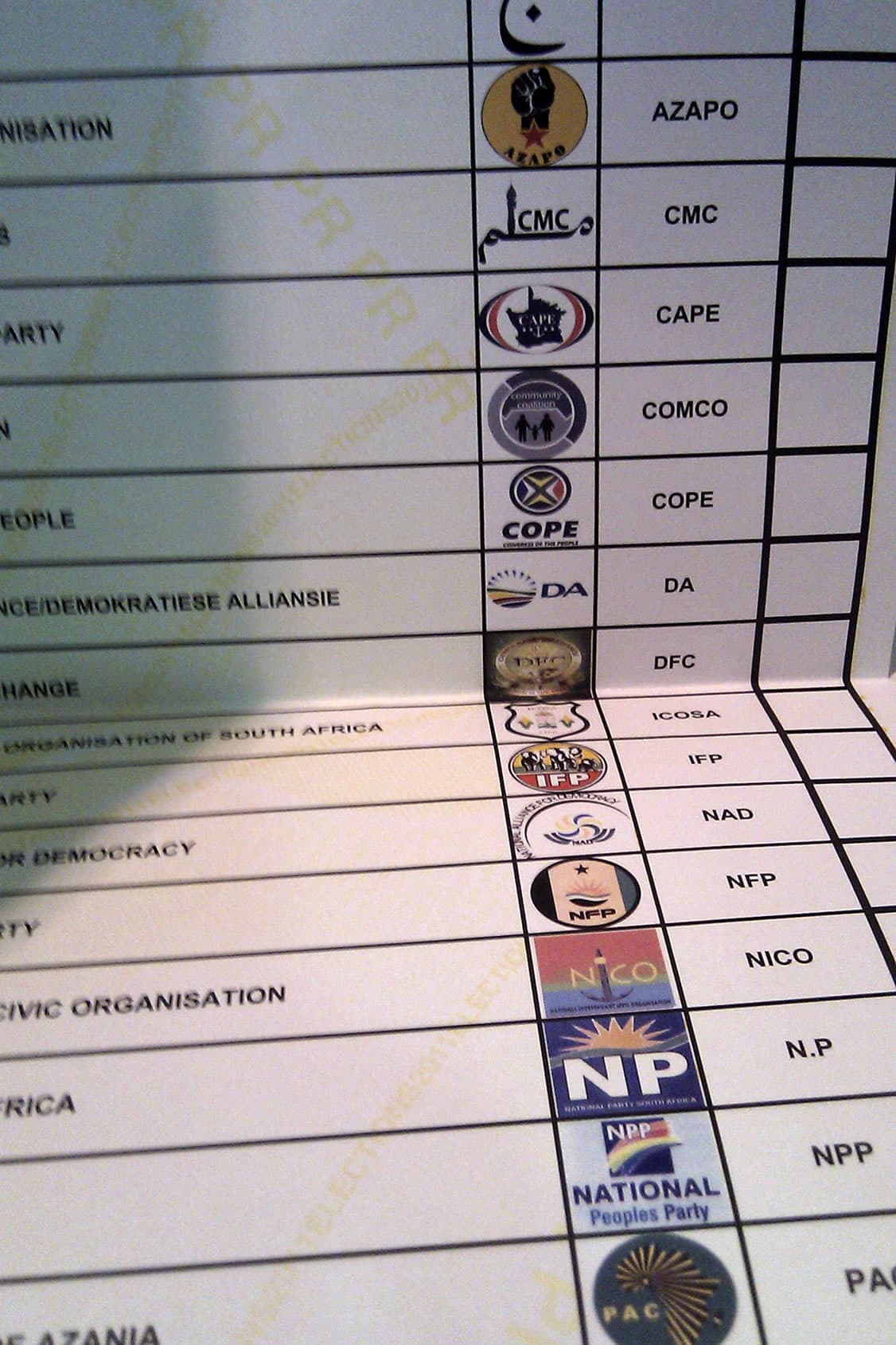
The ActionSA, EFF, MK Party and GOOD party lists will stand for Wednesday's local elections, even where they name just one candidate. The Electoral Court dismissed the DA's bid to have those one-name lists declared unlawful and submitted in bad faith on Friday, 30 October (News24, IOL).
That means your party vote on 4 November counts exactly as printed. If one of these parties wins more seats in your council than it has named candidates, it can add names to its list after the election (News24).
What did the Electoral Court decide?
The court found the one-name lists were not fraudulent, not in bad faith, not unconstitutional and not unlawful, and saw no reason to overturn the Electoral Commission's (IEC) decision to certify them (News24). It said the DA had not made out a factual case that the four parties acted in bad faith (EWN).
The judgment was delivered in Bloemfontein by Acting Judge Nobahle Mangcu-Lockwood after a hearing on 13 October. No costs order was made (IOL).
Two parts of the case are still open. The court postponed indefinitely the DA's challenge to the IEC's 16 September decision to publish the lists, and its conditional challenge to whether the law itself is constitutional (IOL).
Why did the DA go to court?
The DA argued that the four parties were using a rule meant as a safety net for unexpected results as a planned strategy, keeping their councillor candidates hidden from voters until after the votes are counted (News24). It said voters have a right to know who they are voting for (EWN).
How can a party add names after the vote?
Item 17 of the schedule to the Local Government: Municipal Structures Act lets the IEC ask a party to top up its proportional representation (PR) list if it wins more seats than it has candidates on that list (News24).
The court said the law as it stands allows this. The IEC told the court parties have used one-name lists since 2011 (EWN), and ActionSA's Michael Beaumont said the DA itself submitted single-name PR lists in at least 13 municipalities this year (Polity).
On whether the top-up rule should change, the court said the question "needs careful handling, not a rushed jolt", and warned that "changing the rules in the middle of the game" could be unfair (EWN).
Which of your ballots does this affect?
Only the PR ballot, where you vote for a party rather than a person. Your ward ballot, where you pick a named candidate (from a party or an independent), is not affected (IEC).
| Where you live | Ballots you get | Ballot affected by the ruling |
|---|---|---|
| Metro (e.g. Joburg, Cape Town, Tshwane, eThekwini) | Ward ballot (grey), metro PR ballot (yellow) | Metro PR ballot |
| Local municipality | Ward ballot (grey), local council PR ballot (green), district council ballot (yellow) | Both PR ballots |
Sources: IEC observer handbook/), IEC: how to contest municipal elections
Half the seats on metro and local councils are ward seats and half are PR seats filled from party lists. On district councils, 40% of seats come from the PR vote (IEC observer handbook/)).
What does it mean for you on 4 November?
Nothing changes about how you vote. Mark one party on each PR ballot and one candidate on the ward ballot, and check each ballot has a stamp on the back (IEC). Ordinary voting is on Wednesday, 4 November, after special votes on 2 and 3 November (Political Safari).
If you want to know who could end up representing a party on your council, the party lists published by the IEC show only the names submitted before the election. Any extra councillors a party adds afterwards will come from names it supplies later.
FAQ
Are one-name party lists legal in the 2026 local elections?
Yes. On 30 October 2026 the Electoral Court found the one-name PR lists submitted by ActionSA, the EFF, the MK Party and GOOD were not unlawful, unconstitutional or submitted in bad faith, so they stand for 4 November.
Can a party add councillors after the election?
Yes. Item 17 of the schedule to the Municipal Structures Act lets the IEC ask a party to supplement its PR list if it wins more seats than it has named candidates.
Does the ruling change how I vote?
No. You still mark one party on each PR ballot and one candidate on your ward ballot. The ruling only affects which names a party can add to its PR list after the vote.
Is the DA's case completely over?
Not entirely. The court dismissed the main challenge but postponed indefinitely the DA's challenge to the IEC's decision to publish the lists and its conditional challenge to the law itself.
Sources
- News24: Electoral Court throws out DA bid to block single-name party lists
- IOL: DA loses court battle over rival parties' one-name election lists
- EWN: Electoral Court dismisses DA's case over single-candidate lists
- Polity: Electoral Court rulings on municipal list disputes
- Mzansi Political Safari: Electoral Court dismisses DA challenge to one-name PR lists
- IEC: 2026 Municipal Elections Observer Handbook
- IEC: How to vote
- IEC: How to contest municipal elections