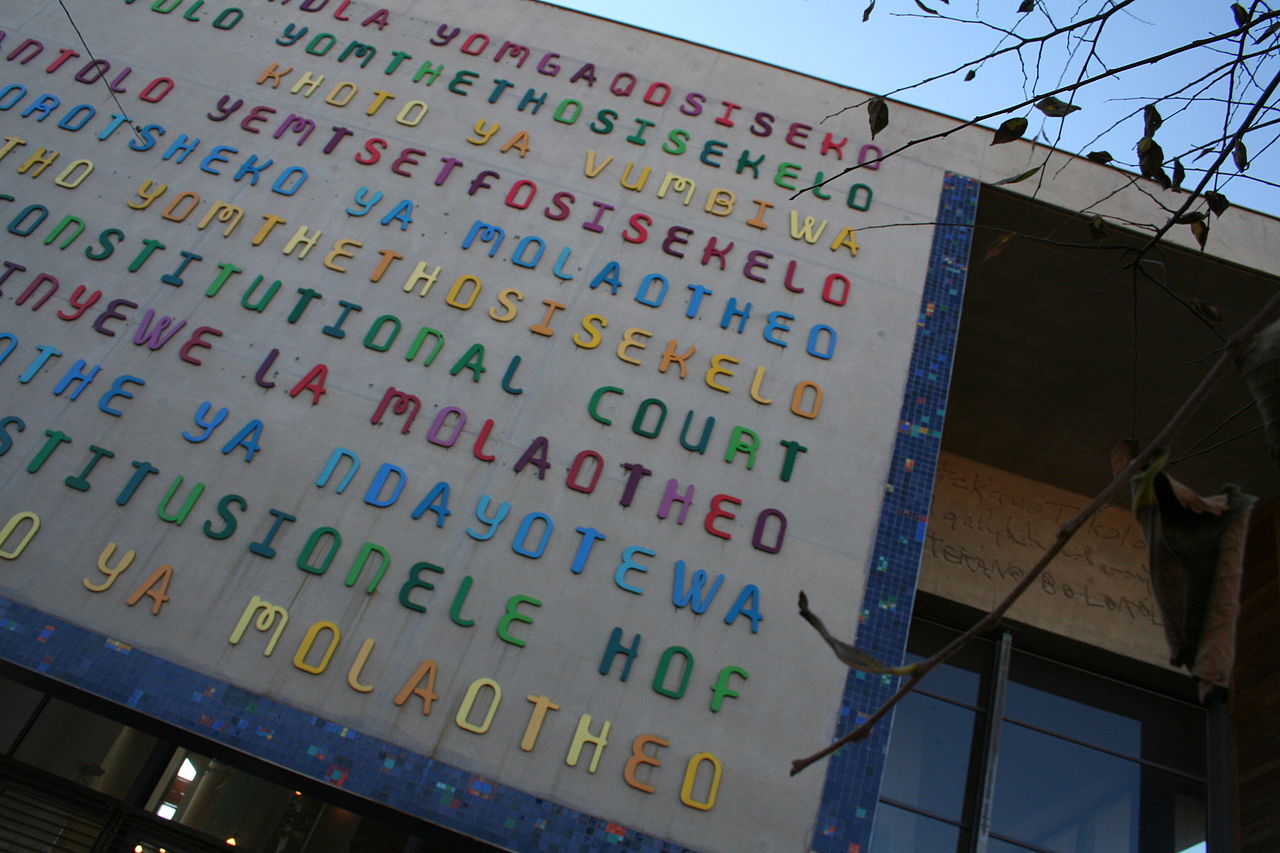
Pardon left waiting 24 years: ConCourt orders damages, rules on delays
André-Pierre via Wikimedia Commons, CC BY 2.0
The Constitutional Court has ruled that President Cyril Ramaphosa and former presidents Thabo Mbeki, Kgalema Motlanthe and Jacob Zuma failed their constitutional duty by leaving a pardon application undecided for 24 years. The two applicants are entitled to constitutional damages, with the amount still to be set (Constitutional Court).
The unanimous judgment, written by Justice Kollapen, was handed down on Wednesday, 21 October 2026 (Constitutional Court).
Who brought the case?
Fusi Simon Mofokeng and the estate of the late Tshokolo Joseph Mokoena, represented by his widow, Xoliswa Percival Mokoena (Constitutional Court).
The two men were convicted of murder, attempted murder and conspiracy to commit robbery after a 1992 shoot-out in Bethlehem, Free State, in which a police officer died. The court's media summary describes it as a flawed trial resting on a single unreliable State witness, and says neither man was at the scene. They were sentenced to life plus 18 years and released on parole in April 2011 after 19 years inside (Constitutional Court).
At the Truth and Reconciliation Commission, three members of the ANC self-defence unit involved said the two men were "complete strangers to them" (Constitutional Court).
How long did the pardon take?
They applied jointly in November 2001. Officials kept telling them it was under consideration. Ramaphosa only pardoned both men, Mokoena posthumously, on 19 December 2025, months after they went to the Constitutional Court in August 2025 (Constitutional Court).
The government argued the delay should be counted from a 2021 resubmission, making it four years, and blamed staff shortages in the Department of Justice unit that handles pardons. The court counted from 2001 and said even four years would have been "unacceptable and inexplicable". It found that a delay this long could only come from "wilful neglect or gross negligence" (Constitutional Court).
Ramaphosa had apologised and called the delay "deeply regrettable". The court said that description was euphemistic and that what happened was far worse (Constitutional Court).
What did the court order?
- A declaration that the current and former presidents failed to fulfil their duties under sections 84(2)(j), 83(b) and 237 of the Constitution, in their official capacities (Conviction).
- Constitutional damages for Mofokeng and Mokoena's estate. The applicants must file written arguments on the amount by 11 November 2026, and the government by 25 November 2026 (Conviction).
- Ramaphosa, in his official capacity, must pay the legal costs (Conviction).
The court refused a structural interdict that would have forced the Presidency to overhaul the pardon system, and declined to set a deadline for deciding pardons, saying that depends on each case (Constitutional Court). It is the first time the court has considered constitutional damages for a violation outside the Bill of Rights (Constitutional Court).
What does this mean for other pardon applications?
There is no right to be pardoned. But the court confirmed that anyone who applies has the right to have the application decided rationally, in good faith, diligently and without delay, and that the President carries full responsibility for every step, including work delegated to the Justice Department (Constitutional Court; PMG).
The President's power to pardon comes from section 84(2)(j) of the Constitution (Constitution). Applications go through the Department of Justice and Constitutional Development, which handles presidential and political pardons through its expungements unit at [email protected] or 080 122 9017. The service is free (Department of Justice).
FAQ
What did the Constitutional Court rule on 21 October 2026?
It found that President Ramaphosa and former presidents Mbeki, Motlanthe and Zuma failed their constitutional duty by leaving a joint pardon application undecided from 2001 to 2025, and that the applicants are entitled to constitutional damages.
How much compensation will the men get?
The amount has not been set. The applicants must file written submissions by 11 November 2026 and the government by 25 November 2026, after which the court will decide.
Were the two men pardoned?
Yes. Ramaphosa pardoned Fusi Simon Mofokeng and, posthumously, Tshokolo Joseph Mokoena on all counts on 19 December 2025.
Does everyone have a right to a presidential pardon?
No. The President decides whether to grant a pardon, but applicants have a right to have their application decided rationally, in good faith, diligently and without delay.
How do I apply for a presidential pardon in South Africa?
Contact the Department of Justice and Constitutional Development's expungements unit at [email protected] or 080 122 9017 for the forms. The service is free.
Sources
- Constitutional Court: Mofokeng and Another v President and Others CCT246/25 media summary
- Conviction: Ramaphosa and predecessors failed to decide prisoners' pardon application for 24 years
- The Citizen: ConCourt slams Ramaphosa, predecessors over 24-year delay in pardon saga
- PMG: Reply by the Minister of Justice on pardon applications
- Constitution of South Africa, Chapter 5
- Department of Justice: Expungements and pardons